Phone:
416 830 8854
Whatsapp:
416 830 8854

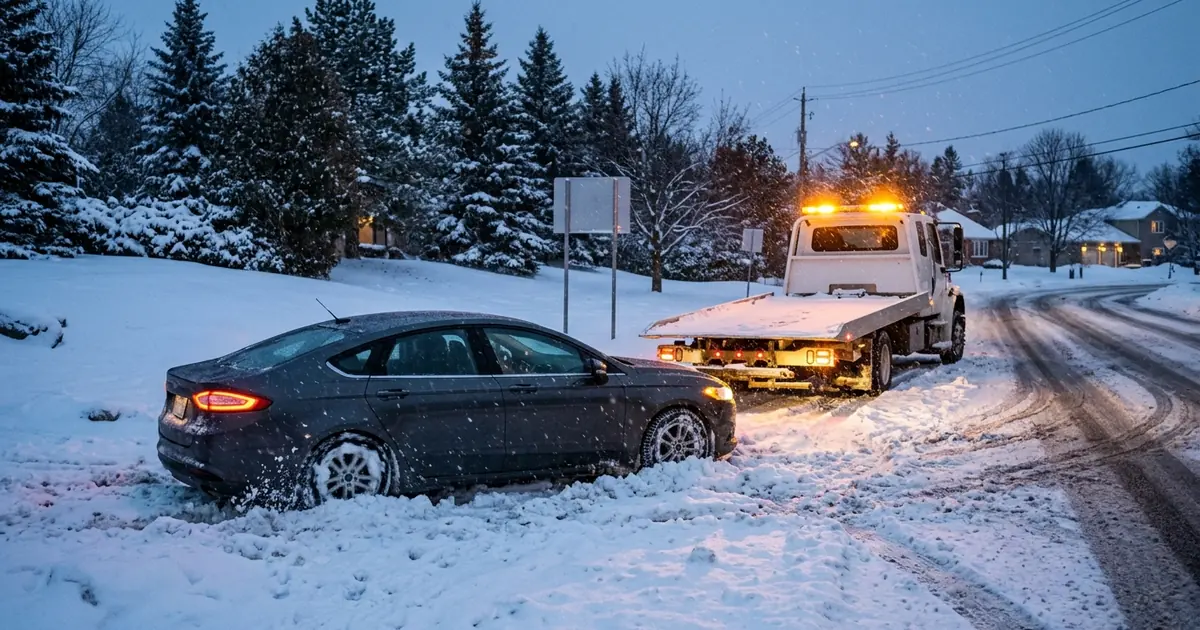
Winter driving in Toronto presents serious challenges. A car stuck in snow or slid into a ditch is stressful, but knowing how to handle it keeps you safe and speeds up recovery. At GTA Flatbed Towing & Float Services, we handle winter ditch recoveries across Toronto and the GTA. We take winter recovery calls 24/7.
Follow this step-by-step checklist to safely manage a slide-off and arrange a professional winch-out. For general cold-weather advice, see the Province of Ontario’s winter driving guidance.
Before calling a winch out service, you might be able to free the car yourself if it is only lightly stuck.
When your vehicle leaves the roadway, your first priority is safety and preventing secondary collisions. During a storm, plows and salt trucks may pass close by; the City of Toronto winter maintenance page explains how roads are cleared.
Before calling for assistance, take a moment to understand your vehicle’s position to help dispatchers send the right equipment. On a highway, you can also check road conditions on 511 for closures near you.
When calling GTA Flatbed for a winch out service at 416-830-8854, clear communication ensures we deploy the right equipment. Be prepared to provide:
A winch-out is a specialized recovery procedure to pull a vehicle back onto a solid surface without causing structural damage. For the full picture of highway recovery, see our emergency towing guide.
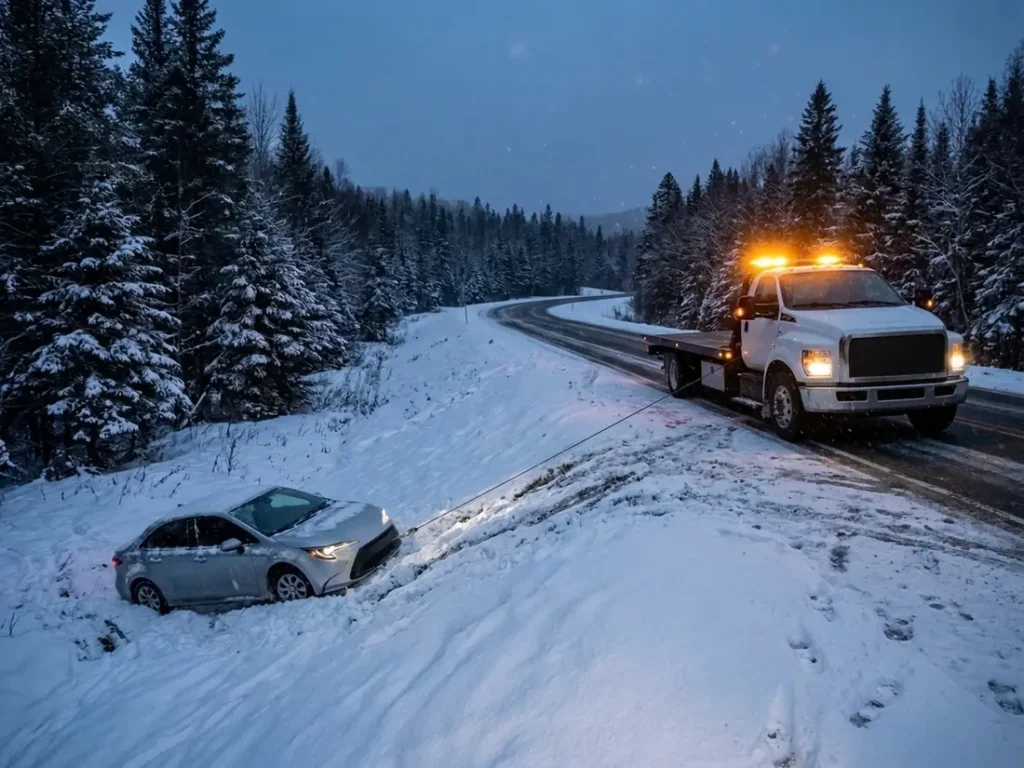
When our operator arrives, they assess the scene. The flatbed truck is positioned securely on solid pavement, and the operator extends a winch line. Instead of hooking onto weak bumpers, the operator attaches to a proper recovery point (check your owner’s manual for its location). The winch steadily draws the vehicle out of the ditch, preventing further damage that often occurs when untrained individuals attempt recovery using tow straps.
Once back on pavement, it may not be safe to drive. A flatbed tow truck is necessary if:
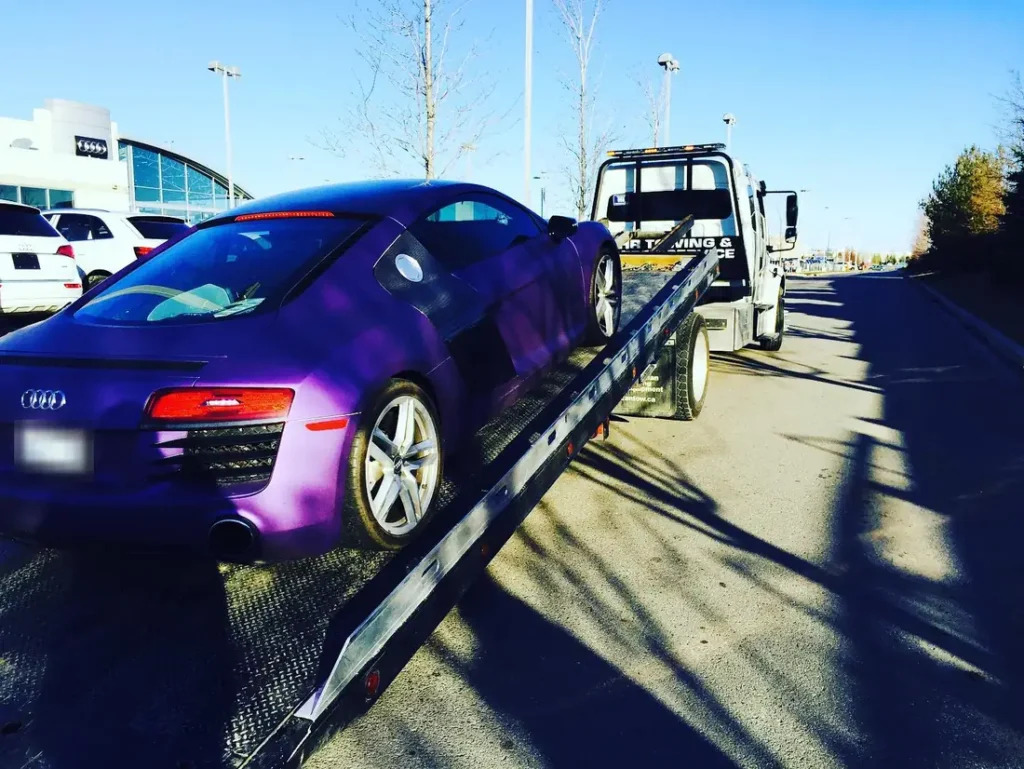
If transport is required, our operator loads your vehicle onto a zero-degree tilt tray, securing it by the tires with soft straps. This is the same method we use for our standard flatbed towing service.
GTA Flatbed provides transparent pricing. Our standard flatbed towing rate is a $150 hook-up fee plus $5 per kilometre, covering local dispatch, travel, and loading.
When a ditch recovery is required, additional winching is necessary. Winching is an extra charge depending on the complexity of the recovery and vehicle condition. Any extra charge for winching is confirmed with you before dispatch. There are no hidden fees. See the pricing section on our flatbed towing page for the full rate breakdown.
If your vehicle is blocking a live lane, is on a highway shoulder, or is in a dangerous position, call 911. If you are safely off the road in a ditch, call a professional towing company equipped with winch out capabilities.
Our standard transport rate starts at a $150 hook-up fee plus $5 per kilometre. Winch out service requires an extra fee based on the difficulty of the recovery, which we will confirm with you before dispatching a truck.
First, ensure your exhaust pipe is clear of snow. Try clearing the area around the tires and using traction aids like floor mats. Do not spin your wheels excessively. If it remains stuck, call for a winch out service.
It can. CAA roadside assistance covers towing and, depending on your membership level, help getting a vehicle out of a ditch or snowbank. Coverage and limits differ by plan, so call CAA first or check your membership details. If you would rather call us directly, our winch-out price is confirmed with you before we dispatch a truck.
Rely on GTA Flatbed Towing & Float Services for safe, controlled recovery. We provide specialized winching across Toronto, Mississauga, Brampton and all the cities we serve across the GTA.
Call or WhatsApp dispatch at 416-830-8854 for an upfront quote confirmed before dispatch, or use our contact page. Visit our emergency towing page for more details.