Phone:
416 830 8854
Whatsapp:
416 830 8854

Permits, Escorts and Routes
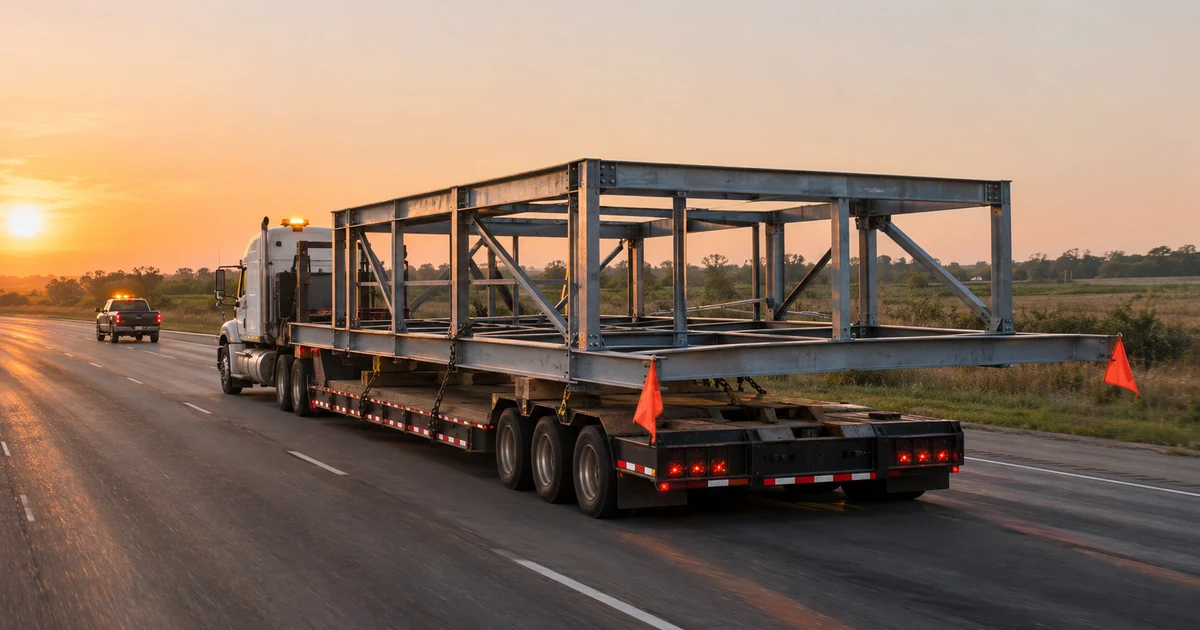
Oversize load transport Ontario projects start with three questions: does the load exceed the legal size or weight, which MTO permit applies, and does the route need a pilot escort? This guide answers each one for moves across the Greater Toronto Area (GTA).
Moving oversized industrial cargo, large construction machinery and prefabricated structures takes careful planning, balanced axle loads and strict regulatory compliance. On Ontario’s busy expressways it takes a lowboy float trailer, pilot escort vehicles where the permit calls for them, a checked route and close attention to provincial highway safety rules.
This guide covers how oversize load transport works, the trailer and deck types used, Ontario Ministry of Transportation (MTO) permits, routes across the GTA and how to choose a qualified carrier.
Oversize load transport (also known as overdimensional or overweight hauling) is the specialized movement of cargo that exceeds standard legal dimensional or weight limits established under Ontario’s Highway Traffic Act (HTA).
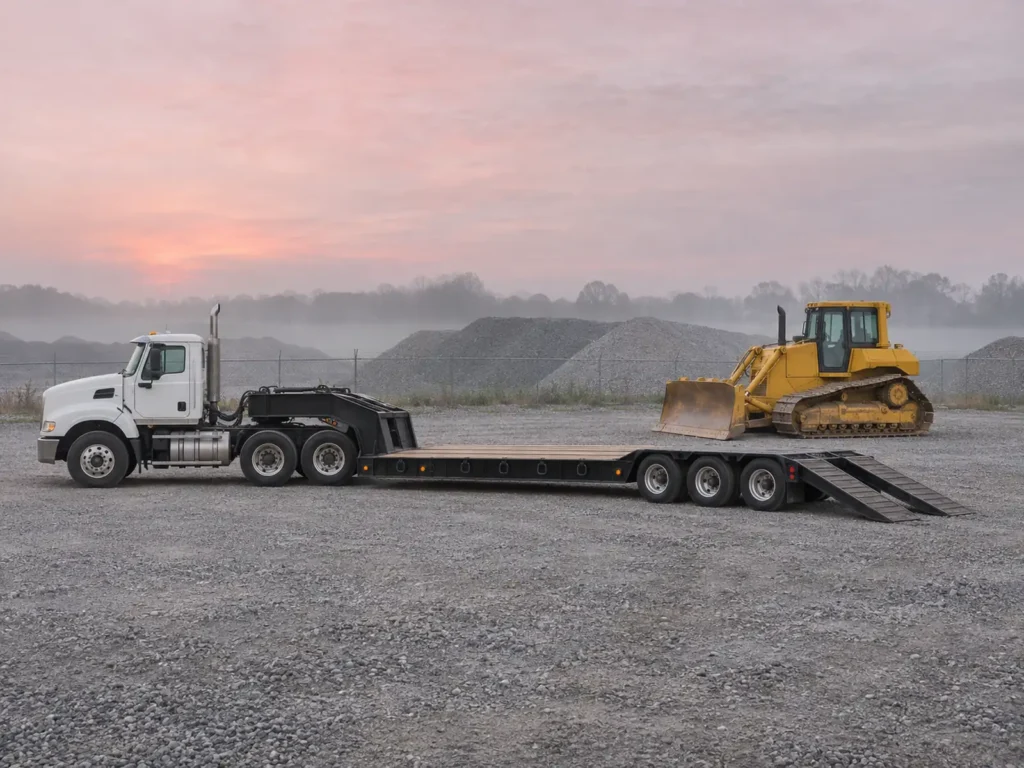
As a general guide, a load wider than 2.6 m (8 ft 6 in) or taller than 4.15 m (13 ft 7 in) is treated as oversize in Ontario, and length limits depend on the vehicle combination. MTO sets the exact limits, so we confirm the permit class for your load before the move.
A load that cannot be broken down has to have its weight spread correctly across the right trailer, which protects the road and keeps the load stable. Our heavy equipment transport uses lowboy float and tilt deck trailers.
Standard Heavy Towing
Understanding the operational and regulatory differences between standard heavy vehicle towing and specialized oversize load haulage is essential for project safety and compliance. Loads that stay within legal limits can often move by tilt and load instead, with no oversize permit.
| Feature | Standard Heavy Towing | Oversize Load Transport |
| Cargo Dimensions | Within legal limits (2.6m wide, 4.15m high) | Exceeds legal width, height, length, or weight |
| Transport Equipment | Standard flatbed or tilt deck within legal limits | Lowboy float, step deck or steerable dolly trailer |
| Permit Requirements | Standard CVOR commercial vehicle licensing | MTO Single Trip, Project, or Annual Oversize Permits |
| Escort Vehicles | None required under normal driving conditions | Certified Pilot Escort Cars (front and rear) when required |
| Route Restrictions | Standard highway travel rules apply | Pre approved route surveys, bridge clearances, curfew hours |
Securing an overdimensional payload requires exact calculations of Working Load Limits (WLL) under provincial transport safety laws. Heavy machinery or structural steel must be anchored using heavy duty Grade 70 or Grade 80 alloy transport chains equipped with direct ratchet load binders applied at strategic tie down points to prevent load shift during sudden braking or lane changes on major highways like Highway 401, Highway 407, and Highway 400.
Moving overdimensional or overweight cargo across Ontario is governed by strict regulations enforced by the Ministry of Transportation Ontario (MTO) and the Ontario Provincial Police (OPP).
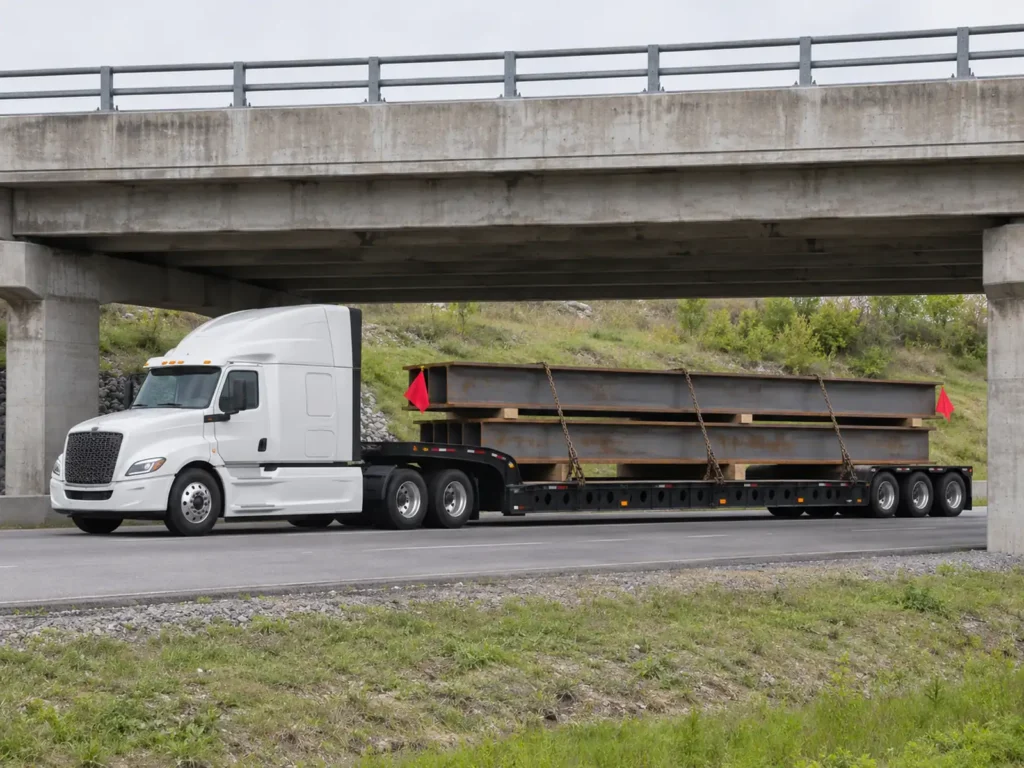
Carriers operating across Toronto, Mississauga, Brampton, and the wider GTA must maintain active Commercial Vehicle Operator’s Registration (CVOR) certificates and acquire specific MTO permits before dispatch:
Ontario regulations set safety measures based on the load’s dimensions and the permit:
Navigating complex overdimensional routes through Southern Ontario demands precise timing and pre surveyed transit corridors.
Common corridors include Highway 401 and Highway 427 through Toronto, the industrial areas of Mississauga, Brampton and Vaughan, and Durham Region around Oshawa. Every route is checked against the permit before the load moves.
Peel and York regions hold many of Southern Ontario’s industrial sites, so oversize moves of construction machinery, manufacturing presses and transformers between yards and job sites are common here. See our service areas for every city we cover.
Hauling overdimensional cargo across long distance provincial routes demands route surveying to avoid low overhead rail bridges, municipal weight restricted roads, and construction zones.
Follow these key steps when planning an overdimensional or heavy equipment transport project:
Need Reliable 24/7 Oversize Load Transport in Ontario?
For safe, fully permitted oversize load transport, heavy machinery hauling, and lowboy float services across Toronto, the GTA, and Ontario, request an oversize load quote from GTA Flatbed Towing & Float Services or call 416-830-8854 for route planning.