Phone:
416 830 8854
Whatsapp:
416 830 8854

How a Heavy Load Is Secured
A machine that weighs several tonnes does not stay put on a trailer because of its weight. It stays put because of how it was placed, what holds it down and whether anyone checked. This guide follows a load from the yard to the deck and the road, and it is written for owners and site managers arranging equipment hauling Brampton jobs depend on. GTA Flatbed Towing & Float Services handles the loading and securing on each haul.
how a load goes from yard to deck
Every haul has the same four stages: position the machine, load it, secure it and check it. Skipping one is how loads shift.
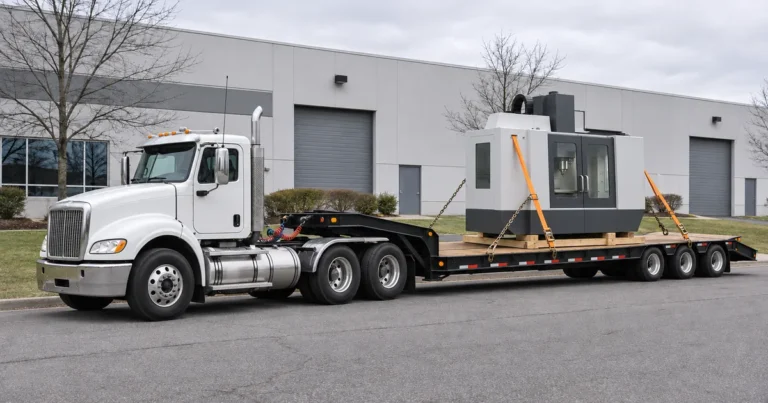
The trailer is chosen first. A low float trailer transport carries tall and tracked machines, and a tilt deck suits machines that drive on. For a precision machine that needs extra planning, our machinery transport guide covers the inside-the-building side. This article stays on the road side, which is how the load is held.
ramps, tilt, winch, positioning
Loading is where most of the risk sits, because the machine is moving. A typical sequence:

For more on the tilt method, see tilt deck loading.
how the load is tied down
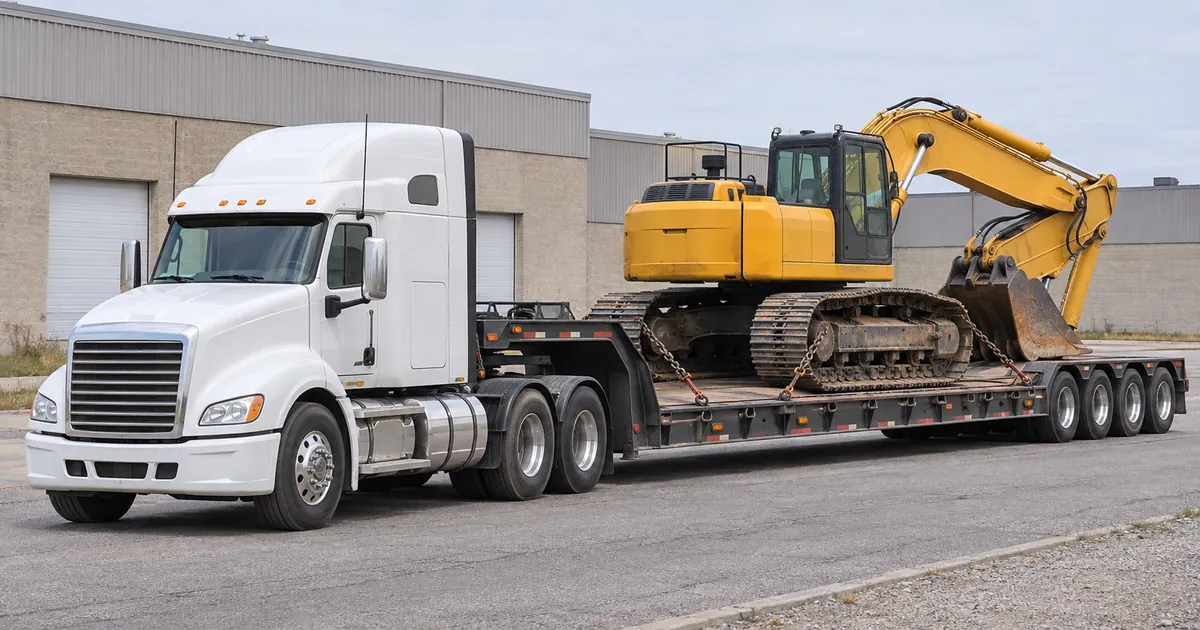
Once the machine is in place, it is tied to the deck at rated anchor points. For a tracked machine, excavator tie down chains run from the frame to the trailer’s anchors, and binders pull them tight. Lighter or wheeled machines may use heavy straps instead. Each piece of equipment has a rating, and the combination must match the load.
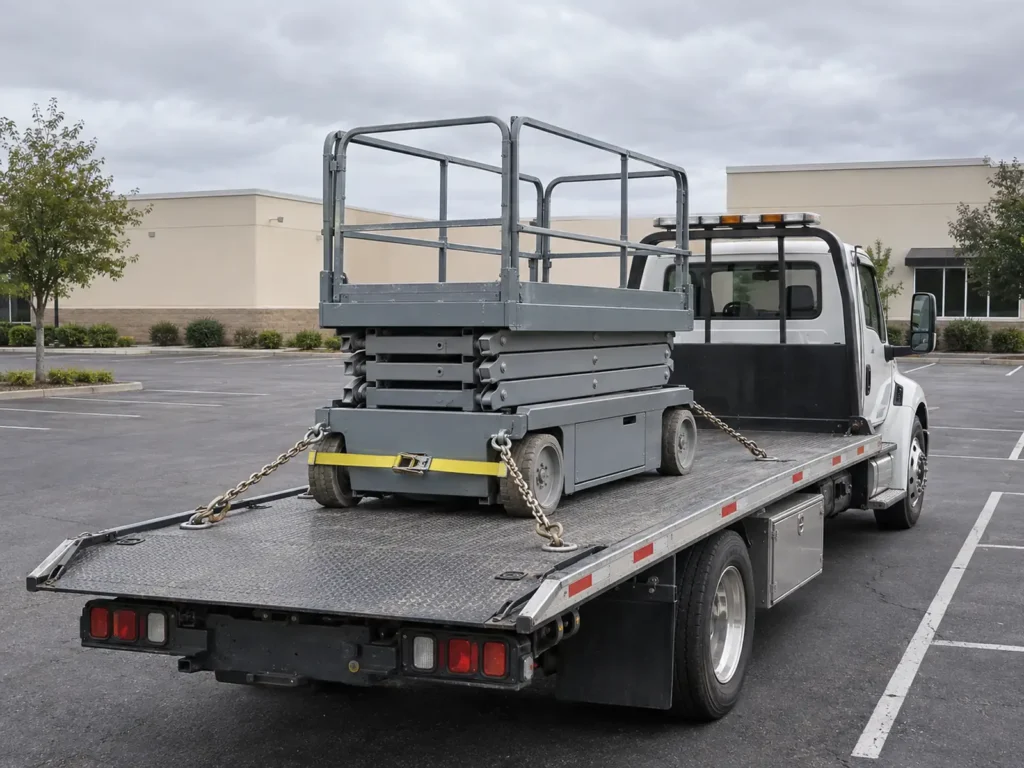
In Ontario, the rules sit in Ontario Regulation 363/04, which adopts National Safety Code Standard 10. Between them, they set minimum tie-down numbers and strengths for heavy equipment, based on the machine’s weight and type. Gear that is worn, damaged or under-rated is taken out of service.
A few points apply to almost every machine:
booms, buckets, forks and loose parts
A machine is only secure if its moving parts are too. Before departure, each part gets its own treatment:
This is also where the trailer decision matters. If you are unsure which suits the machine, our guide to choosing float, tilt deck or flatbed compares them. The attachment plan changes the answer, because a machine with a long boom and a bucket is not the same load as the same machine without them.
Checks do not end when the last binder is tight. A reliable sequence has three:
If anything has loosened, it is retightened on the spot. The check is quick, and it is much cheaper than a load that moves.
On every haul, the driver should be able to point to each tie-down and say what it is rated for.
Brampton jobs often start in industrial and commercial areas around Queen Street, Steeles Avenue and Bramalea, with fast links to Highway 410, Highway 407 and Highway 401. Those roads help once the truck is loaded. The last stretch into a yard or site still needs checking: gate width, turning room, soft ground and overhead wires.
Mention them when you call. If your move starts or ends in the city, see our page on towing in Brampton. To get a price, send your machine details for a quote: the make, model, approximate size, whether it runs and the two addresses. Equipment hauling is quoted per job, and dispatch answers 24/7 on 416-830-8854.